



BMET Career Path in 2026: Field Service vs. In-House vs. Manufacturer Direct — Pros and Cons
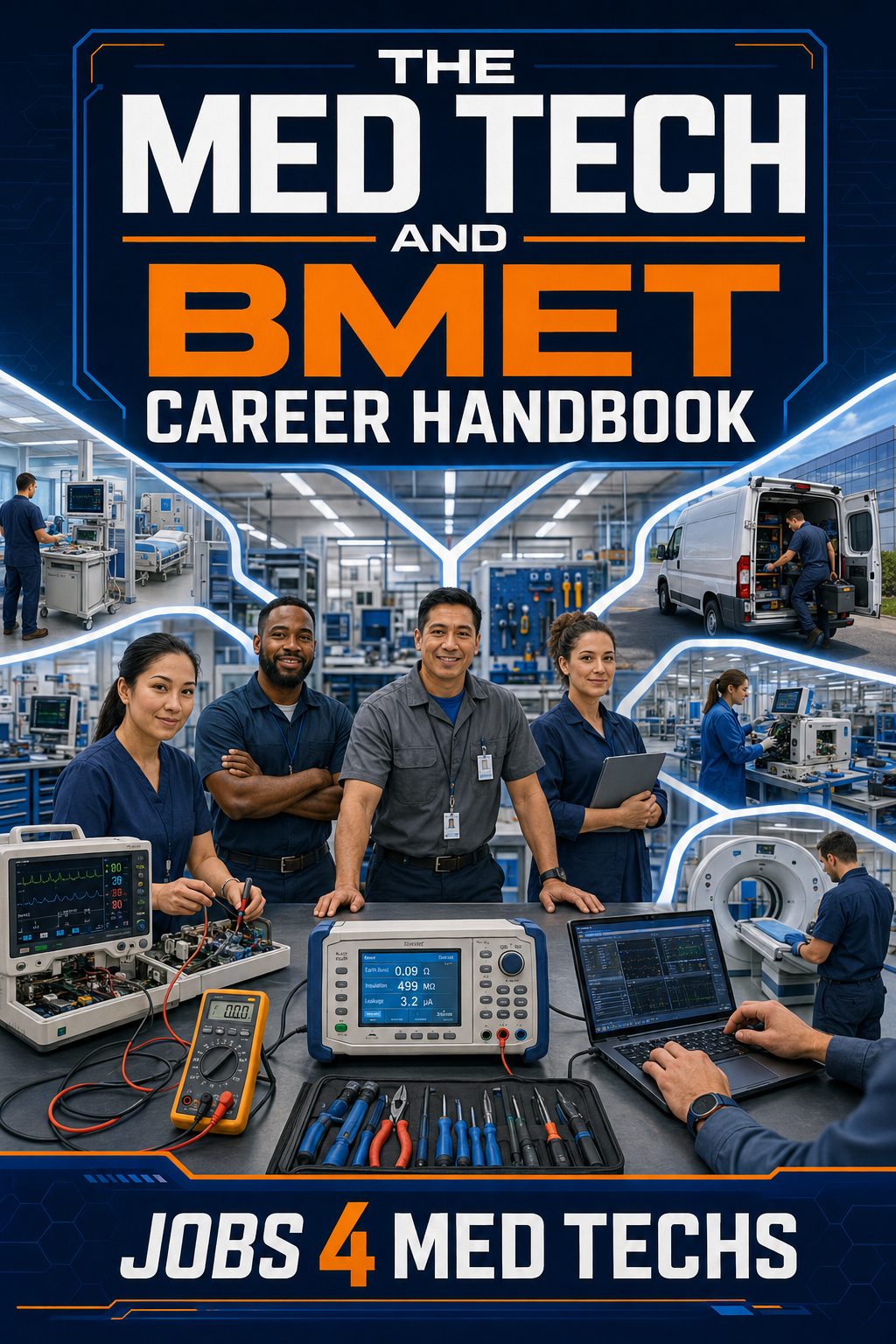
Every biomedical equipment technician eventually faces the same fork in the road: field service, in-house hospital work, or manufacturer-direct. Field service buys variety and windshield time in equal measure — multiple accounts, a wide modality mix, and the kind of independence that either energizes you or wears you down by year three. In-house work trades that variety for depth and belonging: you know every device in the building, you know the nurses by name, and you are the person paged when an infusion pump fails at 2 a.m. Manufacturer-direct offers the deepest platform expertise and the best factory training, at the cost of working on one company's iron for the length of your tenure.
The credential that travels across all three is certification. AAMI's Certified Biomedical Equipment Technician (CBET) credential recognizes several eligibility paths — an associate degree or higher in an electronics, technology, or science program; completion of a U.S. military biomedical equipment technology program; or two years of full-time BMET work experience — and applicants who do not yet qualify may enter under candidate status with five years to complete the requirements. Certification is renewed every three years with documented continuing education. Confirm current fees, eligibility, and exam windows directly with AAMI, since certification programs update their handbooks on their own schedule.
The demand picture is unusually strong for a hands-on technical trade. The U.S. Bureau of Labor Statistics reported a median annual wage of $62,630 for medical equipment repairers in May 2024, with the lowest ten percent under $39,060 and the top ten percent above $99,290 — and it projects 13 percent employment growth from 2024 to 2034, much faster than the average across all occupations, with roughly 7,300 openings each year. That spread between the bottom and top decile is the whole career in one statistic: specialization, certification, and modality depth are what move a technician from one end of it to the other.
So choose the path that matches the life you want, not the one that sounds most impressive in a break room. Then let us put you in front of the employers who are actually hiring for it. We work biomedical placements every day, we know which health systems pay for CBET prep and which only talk about it, and we will tell you plainly when a posting is a stepping stone versus a destination. Send us your résumé and your modality list — imaging, dialysis, anesthesia, lab, sterilizers — and we will come back with roles worth your time.
Sources: AAMI — Certified Biomedical Equipment Technician (CBET); U.S. Bureau of Labor Statistics — Medical Equipment Repairers